
AI strategy and planning engagement
Find the gap.Plan the whole system.
Whatever is stopping your company from becoming AI-native, the Black Book plans the system that closes it, across every department.
Book a discovery call
The engagement
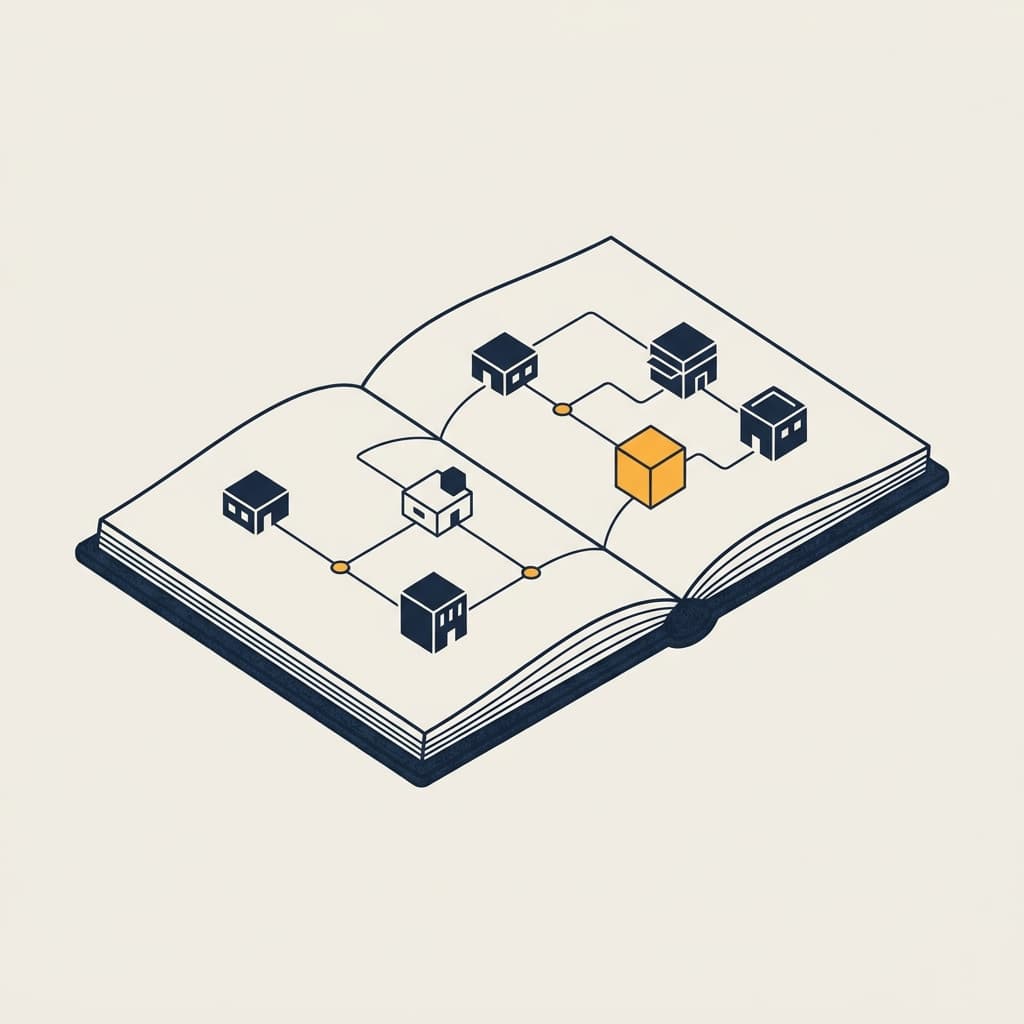
One plan that closes four gaps.
We map how your company really decides, design the AI system that fits, and hand over a plan your teams can act on.

STRATEGY
A plan for the whole company
Where AI fits in each department, in dependency order, written for your board.
On AI readinessVENDORS
The right vendor, scored
A ready-to-issue RFP and scoring rubric, with lock-in terms written out before you sign.
The integration taxPEOPLE
The right people
Named roles, salary bands and interview tests, plus introductions to vetted engineers.
The engineer networkSPEND
What it will cost to run
A three-year cost of ownership, starting from the AI subscriptions you already pay for.
Who owns the decisionThe method
We map the real process before designing anything.
Most companies can describe the process they wrote down. The work usually runs through a different one.
Why most AI programmes stall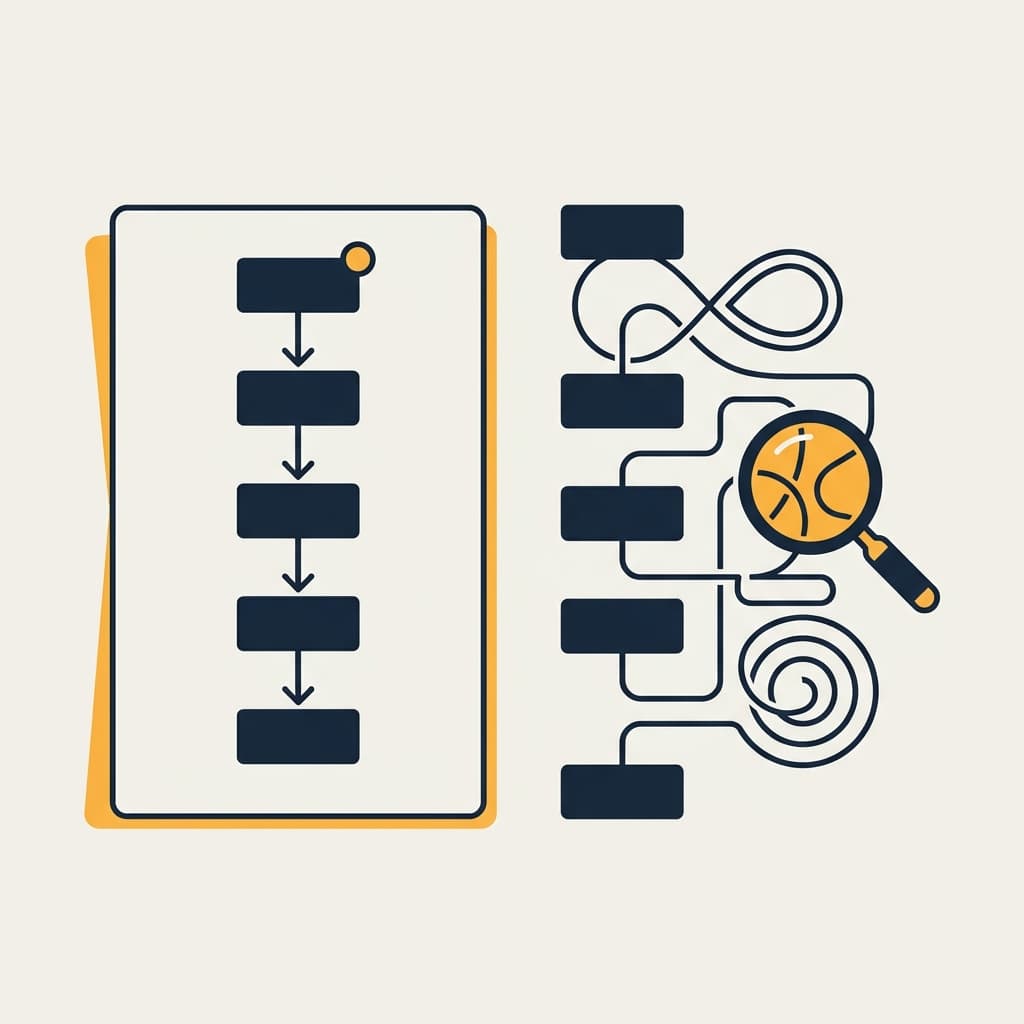
- 01
Size it in Workflow Units
A Workflow Unit is one end-to-end process that crosses departments. The count sets the fixed price.
- 02
Hear each side separately
Those who do the work and those who sign it off describe different processes. The differences are the finding.
- 03
Read the evidence
Timestamps, approval chains and revision counts show the waits nobody reports.
- 04
Measure the baseline
Today’s cycle time, handoff count and error rate, so every later claim is checked against your own numbers.
- 05
Design the system, prove the risky part
Build, buy or wait decided for each piece, with one or two proofs of concept where a part needs proving.
How long it takes
4–6 weeks
One department
1–2 Workflow Units
8–10 weeks
Three to five departments
3–5 Workflow Units
12–16 weeks
Ten or more departments
6–15 Workflow Units
The fit
One question decides fit.
Is there a decision your company makes again and again, where most of the time goes on gathering, checking and chasing before anyone decides?
- Bought by the CEO
- 51 to 1,000 people
- Any sector

It pays for itself where decisions are slow for reasons nobody owns.
Experts doing retrieval
Senior people spend their day assembling context before they can apply the judgement you hired them for.
Work that crosses three or more teams
Every handoff adds a wait, nobody owns the whole path, and chasing status has become someone's job.
Precedent you cannot find
The answer to a past decision sits in an inbox or a shared drive, and finding it costs more than deciding again.
Pilots that never scaled
You already pay for AI seats. One team tried something. It never reached daily use.
The deliverables
Seven deliverables, usable the day they arrive.
Each is written to hand straight to procurement, engineering or leadership.

01Use Case PortfolioFive to fifteen validated uses of AI, in dependency order.
Five to fifteen validated uses of AI, scored on impact, feasibility and data readiness, and arranged on a dependency tree so foundational work comes first.
02Technical ArchitectureData flow, integrations and deployment options, with the tradeoffs stated.
Data flow, integration specifications and deployment options (cloud, hybrid or air-gapped), with the tradeoffs of each stated.
03Data & Governance FrameworkPrivacy, access, audit trails and human sign-off, mapped to your regulator.
Privacy, role-based access, retention, audit trails and a human in the loop on every critical decision, mapped to your actual regulator.
04RFP & Vendor Procurement KitA ready-to-issue RFP, scoring rubric and security questionnaire.
A ready-to-issue RFP, vendor scoring rubric, SLA benchmarks and security questionnaire, with lock-in prevention written into the templates.
05Cost & Inference ModelA three-year cost of ownership, with every assumption on the page.
Implementation ranges, inference projections and a three-year total cost of ownership across usage volumes, with every assumption on the page.
06Quality & Validation ProtocolsKPIs, the baseline method and kill criteria for every use case.
KPI definitions, the baseline method, A/B testing requirements, human-oversight service levels and kill criteria for every use case.
07Implementation RoadmapPilot, expansion and institutionalisation, with named owners and gates.
Pilot, expansion and institutionalisation, with dependencies, named owners, steering checkpoints and what must be true to pass each gate.
After the plan
Three ways to carry it out
You choose how the rest gets done, and we make the introductions.

The right vendor
We run the RFP, score the field and sit on your side of the table through selection.
The right hire
Vetted engineers from the ArkOne network who want permanent roles, introduced onto your own payroll, with the hiring kit to assess them.
The right contractor
Engineers from the same network who work alongside your team on contract, for as long as the work needs them.
Independence
How the advice stays independent

- Your data stays in your systems
- The engagement runs on interviews, screen-shares and documents you choose to share.
- Neutral on models and vendors
- An Anthropic Partner and an OpenAI Select Partner, paid by you alone. The scoring can rank any vendor first.
- Targets, measured against your baseline
- Every expected gain is a target, set against the baseline we measure with you in the first weeks, and reported against that number.
Questions
What does the Black Book cost?
A fixed fee from USD 30,000, priced on the number of Workflow Units in scope. You receive the scope and the price in writing within 48 hours of the scoping call, before you commit to anything.
How long does it take?
From 4 weeks for one department to 16 weeks for a company with ten or more. The scoping call sets the length.
How is the engagement sized?
A 60-minute scoping call. A Workflow Unit is one end-to-end process that crosses departments, from intake to decision and reporting. The count sets the length and the fixed price.
How do you find the real process?
Separate sessions with the people who do the work, the people who sign it off and the people who know why. Each describes a different process, and the differences are the finding. Timestamps, approval chains and revision counts show the waits nobody reports. We also ask to see the last five exceptions you handled, because that is where the real process lives.
Is it just a document?
You get the seven deliverables, plus one or two proofs of concept where part of the plan needs proving before you commit. For the rest, you choose the route: a vendor we help you select, engineers you hire, or engineers on contract.
Does our sector matter?
Sector does not decide fit. A sales team whose deals wait on internal approvals qualifies the same way a funder reviewing applications does. It is a poor fit for a single-team process with no handoffs, or for work that is already fully automated.
Will we be tied to one AI vendor?
ArkOne is both an Anthropic Partner and an OpenAI Select Partner, and we are paid by you alone. The procurement kit writes lock-in prevention into your contracts, and the scoring can rank any vendor first.
Do you need access to our systems?
The engagement can finish on interviews, screen-shares and documents you choose to share. Metadata sharpens it when your own admin extracts it inside your tenant. We never hold a credential into your systems.
Start with one call.
A 60-minute discovery call scopes the work. A fixed scope and price follow in writing within 48 hours.
Book a discovery call